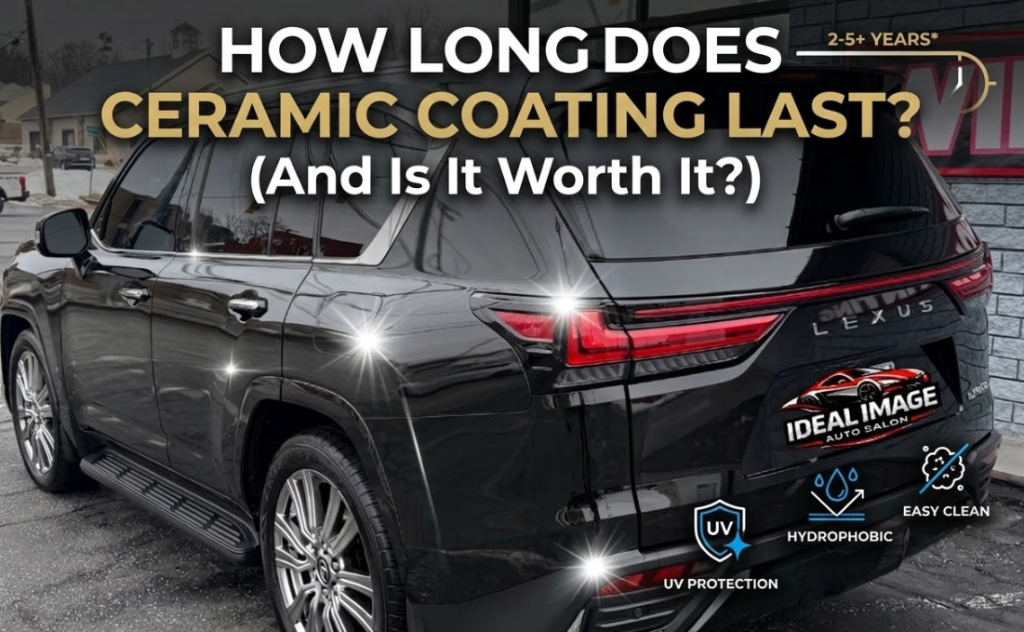
If you're considering ceramic coating for your vehicle, you've probably asked this question: how long does it actually last? Here's everything Baltimore County and Harford County drivers need to know before they invest.
Ceramic coating has become one of the most popular paint protection options available — and it's easy to see why. It delivers a deep, mirror-like gloss, repels water and road grime, and shields your paint from UV damage, chemical contaminants, and environmental wear. But with prices ranging from a few hundred to well over a thousand dollars for a professional installation, one question always comes up before people commit: how long does ceramic coating last, and is the investment worth it?
The short answer is that a professionally applied ceramic coating typically lasts anywhere from two to seven years, with some premium-grade products carrying warranties that extend even further. But the longer answer — and the one that actually helps you make a smart decision — involves understanding what drives that lifespan and what you can do to maximize it.
What Is Ceramic Coating and How Does It Work?
Before talking about durability, it helps to understand what you're actually putting on your vehicle. Ceramic coating is a liquid polymer — typically composed of silicon dioxide (SiO₂) or silicon carbide (SiC) — that chemically bonds with your car's factory clear coat when applied. Unlike car wax, which simply sits on top of the paint and washes away over time, ceramic coating forms a semi-permanent bond at the molecular level. The result is a hard, glass-like protective layer that becomes part of the surface itself.
That bond is why ceramic coatings last so much longer than traditional protectants. Wax can't compete with chemistry. Once cured — a process that takes two to four weeks — the coating creates a hydrophobic surface that causes water, mud, and contaminants to bead up and roll right off. For drivers along I-695 and I-95 dealing with road salt, pollen, and industrial pollution, that level of protection makes a real, visible difference year-round.
How Long Does Ceramic Coating Really Last?
Ceramic Coating Lifespan vs. Other Protectants
The range for professional ceramic coatings is wide — and that's intentional. There's no single answer because lifespan genuinely varies based on several overlapping factors. A coating applied with proper prep on a garage-kept vehicle in Baltimore County can outlast one applied on a daily driver that never sees shade by years. What matters most is the combination of product quality, installation process, environmental exposure, and how diligently the owner maintains it.
What Determines How Long Your Coating Will Last?
1. Product Quality and Grade
Not all ceramic coatings are created equal. Consumer-grade DIY products contain lower concentrations of active ingredients and bond less deeply with the clear coat — that's why they typically max out at six to eighteen months. Professional-grade coatings, by contrast, use higher-concentration formulas that are layerable, meaning multiple coats can be applied to build added depth and durability. These products are often only available to certified installers, which is part of why professional application consistently outperforms DIY kits by a significant margin.
2. Surface Preparation Before Application
This is the factor that trips up the most people — including those who go the DIY route. Ceramic coating bonds to paint. If that paint surface has swirl marks, oxidation, contaminants, or minor scratches sealed underneath, the coating adheres unevenly and degrades faster. A proper installation starts with a full decontamination wash, followed by paint correction to remove any imperfections. Skipping this step doesn't just affect appearance — it directly shortens how long the coating holds up.
At Ideal Image Auto Salon on Belair Road in Nottingham, every ceramic coating job begins with a thorough paint inspection and correction step. We won't coat over flaws — because what you seal in now, you'll live with for years.
3. Environmental Conditions in Maryland
Maryland drivers face a particularly demanding combination of conditions. Winter road salt along I-695 and I-95 is highly corrosive. Summer brings intense UV exposure, tree sap, and heavy pollen. Spring and fall pile on acid rain and wet road grime. All of these work continuously against any paint protection product — but ceramic coating is specifically engineered to resist them. That said, a vehicle parked outdoors year-round in Baltimore County will see more wear on its coating than one kept in a garage, simply due to cumulative exposure time.
4. Post-Coating Maintenance Habits
A ceramic coating is not a "set it and forget it" solution. The coating still needs regular washing — ideally every two to three weeks — using a pH-neutral car shampoo and a soft microfiber mitt. Automatic car washes with abrasive brushes are one of the fastest ways to degrade the hydrophobic layer. Using a ceramic booster or spray detailer every few months helps refresh the surface and extend the protection life. Think of it like maintaining a high-quality watch: it's built to last, but it performs best when cared for consistently.
Professional vs. DIY Ceramic Coating: Which Lasts Longer?
The gap in real-world performance between professional and DIY ceramic coatings is substantial. This comparison covers the key differences Baltimore-area drivers should know before making a decision:
| Factor | Professional Application | DIY Kit |
|---|---|---|
| Lifespan | 2–7+ years ★ BEST | 6–18 months |
| Coating Grade | Professional-only formulas | Consumer-grade products |
| Surface Prep | Full decontamination + paint correction | Varies — often minimal |
| Application Consistency | Controlled environment, expert technique | Risk of high spots, streaks, uneven layers |
| Warranty Available? | Yes — often 2–5 years | Rarely or never |
| Hydrophobic Performance | Excellent and long-lasting | Good initially, fades faster |
| UV Protection | Superior, multi-year coverage | Moderate, shorter duration |
| Chemical Resistance | High — resists road salt, bird droppings, acid rain | Moderate resistance |
| Error Risk | Minimal — trained installer | High — application errors shorten life significantly |
| Long-Term Value | Excellent cost-per-year of protection | Lower upfront, higher total cost over time |
When you factor in the cost of repeated DIY kits every 6–18 months versus a single professional coating lasting 3–5+ years, the professional option often delivers better value per year of protection — on top of far superior results.
Signs Your Ceramic Coating Is Wearing Out
Ceramic coating doesn't fail all at once — it gradually loses its performance properties over time. Here are the warning signs that your coating may be due for an inspection or reapplication:
Water No Longer Beads
The hydrophobic effect is one of the first things to notice. If water is sheeting flat instead of beading and rolling off, the coating's surface properties are degrading.
Paint Looks Dull or Hazy
A fresh coating delivers a deep gloss. If your paint is starting to look flat or lacks depth, the protective layer may be thinning and the clear coat underneath is taking more exposure.
Dirt and Grime Stick More Easily
When the coating is working, contaminants slide off easily. If you're noticing more stubborn buildup after washes, the self-cleaning properties have diminished significantly.
Water Spots Are Harder to Remove
A properly performing coating resists mineral deposits from hard water. Persistent water spots that don't respond to a basic wash are a sign the coating has thinned in those areas.
If you're seeing one or more of these signs on your vehicle, it doesn't necessarily mean you need a full reapplication. Sometimes a professional inspection, decontamination wash, and ceramic booster treatment can restore a significant amount of performance — especially if the coating is still relatively young. Drivers in Baltimore County and Harford County can contact our team for an honest assessment of where your coating stands.
Is Ceramic Coating Worth It for Maryland Drivers?
If you're parking on the street in Nottingham or commuting daily on I-695, ceramic coating earns its value in practical ways that go beyond aesthetics. Maryland winters throw road salt and brine at your paint from November through March. Summer UV exposure is intense enough to accelerate oxidation on unprotected paint. Add in the stop-and-go grime of Baltimore County traffic, tree sap from shaded parking areas, and the general wear of daily driving — and the case for long-term protection becomes straightforward.
Ceramic coating won't make your car invincible. It won't prevent rock chips, deep scratches, or body damage. What it does is create a durable barrier that takes the punishment from everyday environmental exposure instead of your paint. After several years, a properly maintained coated vehicle will have significantly less oxidation, fading, and surface contamination than an uncoated one — which matters both for your enjoyment of the car and its resale value.
For car enthusiasts who take pride in their vehicle's finish, the choice is often easy. For daily drivers looking for low-maintenance protection that makes washes faster and keeps the car looking sharp longer, it's equally compelling. The real question isn't whether ceramic coating is worth it — it's whether the installation is done right.
A professionally applied ceramic coating, maintained correctly, is the most durable, longest-lasting paint protection option available. For most Baltimore County and Harford County drivers, it delivers the best cost-per-year of protection of any product on the market — with results you can see every time you wash the car.
Frequently Asked Questions
For a vehicle driven daily in conditions like Baltimore County traffic and Maryland weather, a professionally applied ceramic coating typically lasts three to five years with proper maintenance. Regular washing with pH-neutral soap, avoiding automatic brush car washes, and using a ceramic booster spray periodically will help you reach or exceed that range.
Yes — ceramic coating provides meaningful protection against road salt and brine by creating a barrier between the salt and your clear coat. It won't prevent salt from contacting the vehicle, but it significantly reduces how deeply contaminants can penetrate and makes post-winter decontamination washing far more effective. This is one of the primary reasons Maryland drivers invest in ceramic protection before winter arrives.
Traditional carnauba wax is not recommended on top of ceramic coating — it can interfere with the coating's hydrophobic properties and create an uneven finish. However, ceramic-compatible spray boosters and detailers are designed to work with your coating and are actually encouraged as part of a maintenance routine. Your installer can recommend the right products to use between professional inspections.
Ceramic coating typically takes two to four weeks to fully cure after application. During that initial curing period, you should avoid washing the vehicle, letting it sit in the rain for extended periods, or exposing it to harsh chemicals. The coating will be touch-dry much sooner, but the molecular bond with your paint continues to strengthen over those first few weeks, which is when proper care matters most.
No — ceramic coating does not fill or hide paint imperfections. In fact, because it enhances gloss, it can actually make existing swirl marks and scratches more visible. That's why paint correction before coating is essential. A proper installation at Ideal Image Auto Salon includes a surface inspection and any necessary correction work before the coating is applied, so what gets sealed in is clean, corrected paint.
The clearest signs are loss of water beading, a dull or hazy paint finish, increased dirt adhesion after washing, and water spots that are difficult to remove. If you're noticing one or more of these, it's worth having a professional assess the coating's condition. In some cases, a decontamination treatment and ceramic booster can restore performance without a full reapplication — we're happy to take a look and give you an honest evaluation.
Ready to Protect Your Paint for Years to Come?
The team at Ideal Image Auto Salon has been helping Baltimore County and Harford County drivers protect their vehicles with professional-grade ceramic coating. Get in touch to schedule your consultation — we'll walk you through your options and give you an honest recommendation for your vehicle and budget.
Schedule Your Consultation📍 7901 Belair Road, Nottingham, MD | 📞 410-663-8468