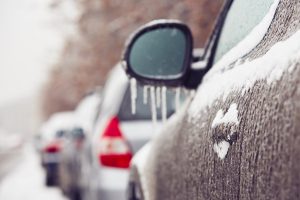
Snow looks harmless, but it sits on top of your clear coat with salt, grit, and dirty slush. The longer it stays on your vehicle, the more contamination it holds against the paint. Most winter paint damage happens during removal, when that trapped grit drags across the surface.
Why Leaving Snow on Your Car Can Damage Paint
Snow picks up grit and turns removal into scratching
Snow collects sand, tiny stones, and debris from roads and parking lots. When you brush it off, you pull that grit across the clear coat. This leaves swirl marks, fine scratches, and dullness.
Road salt sticks to paint and dries into residue
Plows spread salt and liquid brine. Driving throws it onto your hood, doors, and rear hatch. Snow traps salty water on the paint. When it dries, salt residue stays behind and keeps drawing moisture from the air. Over time, this speeds up clear coat wear and staining.
Freeze and thaw cycles create harder scraping
Melting turns snow into slush, then temperatures drop and it refreezes into a crust. Ice pushes people to use more pressure with brushes and scrapers. More pressure increases the risk of scratches.
Packed snow grinds into seams and trim
Snow gets forced into panel gaps, around badges, and near trim edges. It refreezes and expands. When you pry it out, you often hit paint edges and leave marks in tight areas where clear coat is thinner.
Common Paint Problems Caused by Snow Buildup
- Swirl marks and light scratching from brushing
- Clear coat haze on the hood, roof, and trunk
- Water spot stains from dirty meltwater drying on the surface
- Salt film that dulls gloss and makes paint feel rough
- Long-term clear coat thinning from repeated abrasive removal
Fast Signs Your Paint Needs Attention
- Your paint looks dull in direct sunlight even after a wash
- You see circular swirls under parking lot lights
- The surface feels rough after rinsing
- You notice a chalky film near the lower doors and behind the wheels
How to Remove Snow Without Damaging Your Paint
Step 1: Knock off loose snow with the right tool
Use a clean foam snow broom or a soft, dedicated snow tool. Push snow off in light passes. Avoid grinding down into the paint. Shake the tool out often so grit does not build up.
Step 2: Rinse slush before touching the paint
Slush holds the most grit. Do not wipe it off with a towel or glove. Use a rinse first, then wash if needed.
Step 3: Keep scrapers on glass only
Use an ice scraper on windows only. Do not scrape paint to remove ice. For paint, use a rinse and a safe wash method instead of scraping.
Step 4: Use warm water carefully
Use lukewarm water, not boiling. Focus on door seals and glass edges to help release ice. Avoid dumping hot water on a freezing-cold painted panel, since rapid temperature changes can lead to refreeze and extra scraping.
A Simple Post-Snow Routine That Protects Your Paint
Same day: Quick rinse
- Rinse the vehicle at a self-serve bay.
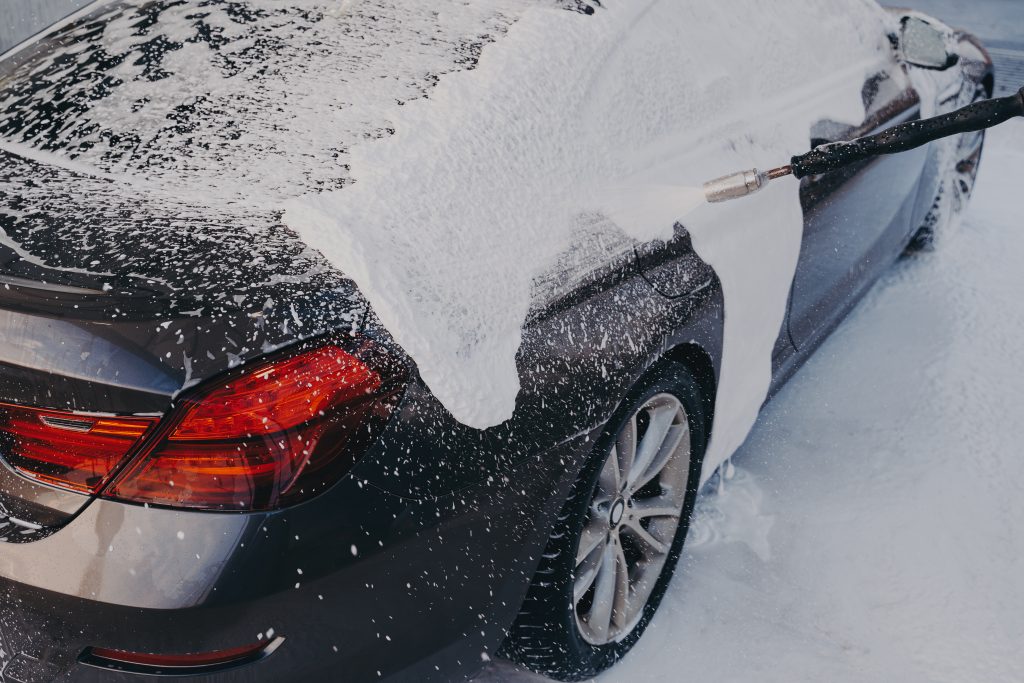
- Start with a high-pressure rinse to remove grit.
- Focus on rocker panels, wheel wells, and behind the wheels where salt builds up.
Within 48 hours: Proper wash
- Wash with a pH-neutral soap and a clean wash mitt.
- Use the two-bucket method or multiple clean microfiber towels.
- Dry with a clean microfiber drying towel or a blower.
- Avoid heavy pressure while drying.
Weekly in winter: Remove salt before it bakes on
- Add an undercarriage rinse if possible.
- Clean lower panels often, even if the rest of the car looks fine.
Protection Options That Reduce Winter Paint Damage
Wax or paint sealant
Wax and sealants add slickness. Snow releases easier, and salt residue washes off with less contact. This lowers scratch risk during winter cleanup.
Ceramic coating
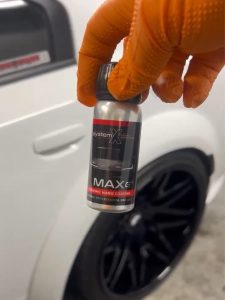
Ceramic coatings add stronger chemical resistance and make maintenance faster. They help reduce how much grime sticks, which cuts down on scrubbing.
Paint protection film
Film helps protect high-impact areas like the front bumper, hood edge, and mirror caps. It reduces damage from winter road grit and frequent brushing.
What to Avoid If You Want to Keep Your Paint Looking New
- Do not use a dirty gas station brush on paint.
- Do not sweep snow off with a dry towel.
- Do not scrub salt spots with paper towels.
- Do not scrape paint to remove ice.
- Do not ignore the roof, snow sliding forward can drag grit across the windshield and hood when you brake.
When Professional Detailing Makes Sense
If winter left your paint dull or swirled, a professional detail helps reset the finish. A shop can remove bonded contamination safely, correct swirls with paint polishing, then apply protection so the next storm does less damage.
Final Tip
Removing snow fast matters, but removing it safely matters more. Use clean tools, rinse before you wipe, and keep salt from sitting on the paint for days at a time.