
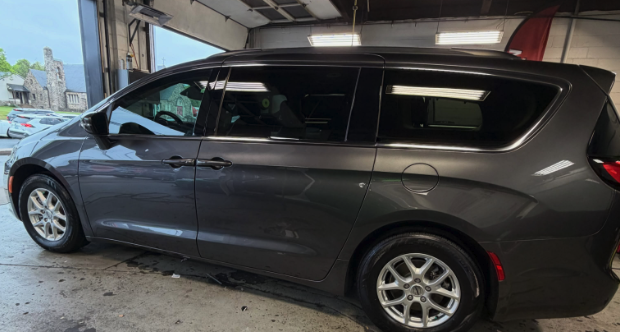
If you park anywhere with trees or open sky in Baltimore County, you've dealt with this: a fresh bird dropping or a sticky drop of tree sap that you noticed too late and now you're staring at it wondering whether it's going to damage your paint. The short answer is that it can, and the longer you wait the worse it gets. Here's how to remove both safely, what tools to keep on hand, and when to call a professional.
Why These Two Are Paint Killers
Bird droppings and tree sap are two of the most common contaminants drivers in Nottingham, Perry Hall, Bel Air, and across Maryland deal with every summer. They look harmless, but they're working on your paint from the moment they land.
Bird droppings contain uric acid and other compounds that begin etching into automotive clear coat within hours of landing. They also contain small amounts of grit and undigested seeds that act as built-in abrasives. The acidity continues working as long as the dropping sits there, which is why an overnight bird dropping in July can leave a permanent etch by morning.
Tree sap contains organic acids, plant sugars, and resins that bond chemically to clear coat on contact. As the sap dries, it shrinks and pulls against the paint, creating tension that can actually crack the finish. Heat dramatically accelerates the bonding, which is why sap that drops on a 90-degree Maryland afternoon can be twice as hard to remove by evening.
Time is everything. Both contaminants are dramatically easier to remove fresh than dried. Acting within hours protects your paint. Waiting days often means permanent damage.
The Universal Rules (For Both)
Before getting into the specific steps for each, four rules apply to both contaminants. Following these protects your paint regardless of which one you're dealing with.
Soak Before You Wipe
The most damage happens when people scrub dried contamination. Always apply your cleaner and let it dwell long enough to soften the deposit before any wiping. Dwell time is what separates safe removal from swirl marks.
Microfiber Only, Always Clean
Use plush microfiber towels, never bath towels, paper towels, or shop rags. Cotton fibers and dirty cloths cause scratches even with gentle pressure. A dedicated clean microfiber per spot is the safest approach.
Wash the Surrounding Area First
Trying to clean a contaminated spot when the area around it is dusty just means you'll grind that dust into your paint as you wipe. Rinse or gently wash the surrounding panel first so you're not introducing new abrasion.
Reapply Protection After
Most cleaning products strip a bit of wax, sealant, or coating performance along with the contaminant. After removal, reapply a ceramic booster, spray sealant, or quick wax to the cleaned area to restore the protective layer.
What to Keep in Your Spot-Cleaning Kit
A simple kit kept in your trunk or garage makes the difference between a quick fix and a panic call to the detail shop. Most of this fits in a small plastic bin.
pH-Neutral Quick Detailer
Your everyday spot-cleaner. Safe on all paint and coatings. Handles fresh droppings and light contamination on its own.
Isopropyl Alcohol (70-90%)
The workhorse for tree sap. Effective at dissolving sticky residue, gentle enough for clear coat when used with proper technique.
Dedicated Bug & Tar Remover
For stubborn sap, baked bug splatter, or hardened residue that alcohol won't touch. Used with dwell time, then wiped away.
Clean Microfiber Towels
Plush, soft, and dedicated to the car. Keep at least 4 to 6 on hand. Wash them separately from household laundry to keep them lint-free.
Plastic Razor Blade (optional)
For fully hardened sap that won't soften any other way. Held flat against the surface only. Never use metal razor blades on paint.
Ceramic Booster or Spray Wax
Used after cleaning to restore protection in the treated area. Especially important on coated vehicles to refresh the hydrophobic layer.
How to Remove Bird Droppings Safely
Fresh droppings are usually a quick fix. Dried or baked-on droppings need more patience. Either way, the technique is the same.
1 Don't Touch It Dry
Resist the urge to wipe it off immediately. Dried droppings contain abrasive material (small grit, seed husks, calcium deposits) that will scratch your paint if you scrub. Walk to your kit first.
2 Soak the Area
Spray pH-neutral quick detailer or a dedicated bird dropping remover generously on the spot. Don't be stingy. The cleaner needs to fully saturate the dropping to break down the acid and soften the deposit.
3 Wait 30 to 60 Seconds
Let the cleaner do its work. For stubborn or fully dried droppings, lay a damp microfiber towel over the spot and let it sit for 2 to 5 minutes. The combination of moisture and dwell time softens even hardened deposits.
4 Gently Lift, Don't Scrub
Fold a clean microfiber into quarters and gently wipe the softened dropping away in one direction. Don't rub back and forth. If residue remains, reapply cleaner and let it dwell again rather than scrubbing harder.
5 Inspect and Refresh Protection
Once the spot is clean, check it carefully in the light. If you see a faint ring or outline, the paint may have been etched. If it looks good, mist on a ceramic booster or spray wax to restore protection in the cleaned area.
Dried bird droppings are essentially a layer of acid mixed with grit. Scrubbing them dry is like sanding your paint with the dropping itself. Soaking and lifting removes the contamination without using the contamination as an abrasive.
How to Remove Tree Sap Safely
Tree sap removal is a tiered approach. Start with the gentlest method, escalate only if needed. Each level handles tougher sap than the last.
Level 1: Fresh Sap, Soft Drops
EasiestIf the sap is still soft and recently dropped, a generous application of quick detailer or warm soapy water with a few minutes of dwell time often does the trick. Lay a damp microfiber over the spot, wait 2 to 3 minutes, then gently wipe. Wash and reapply protection after.
Level 2: Tacky or Partially Dried Sap
StandardApply 70 to 90 percent isopropyl alcohol to a clean microfiber and lay it directly over the sap. Let it dwell for 2 to 3 minutes. Gently wipe the softened sap away in one direction. Repeat once or twice if residue remains. Wash and protect the area after.
Level 3: Hardened or Baked-On Sap
TougherFor sap that's fully cured and resisted alcohol, switch to a dedicated bug and tar remover. Apply per the product directions (usually spray on, let dwell 3 to 5 minutes, wipe gently). These products are formulated to dissolve sap aggressively without damaging clear coat when used as directed. Always wash the area thoroughly after.
Level 4: Old, Fully Bonded Sap
Last ResortFor sap that's been on the paint for weeks or months and won't dissolve with chemical removers, a clay bar pass with lubricant is the next step. The clay physically pulls embedded contamination out of the clear coat surface. This is also when it's worth considering professional help, because at this stage there's a real possibility the clear coat has been damaged underneath.
For sap that's hardened into a thick raised drop, a plastic razor blade held flat against the surface can gently lift the bulk of the deposit before chemical cleaning. Never use a metal razor blade. Never angle the plastic blade. And only use this on truly hardened sap, never on fresh sticky residue, where it can drag and scratch.
Is It Always Tree Sap?
Sometimes the sticky residue covering your hood isn't actually tree sap. It's honeydew, the sugary excretion left behind by aphids feeding on the leaves above your car. Honeydew is especially common under sweet gum trees, oaks, maples, and certain ornamental trees, all of which are abundant in Maryland neighborhoods.
The good news is honeydew is generally easier to remove than true sap because it lacks the organic acids and resin compounds. The bad news is it tends to drop in much higher volume than sap (every aphid produces it constantly), so cars parked under infested trees can be covered in a sticky film in a single day.
Either way, the removal method is the same: soak, dwell, gently wipe. Honeydew often comes off with just warm soapy water if addressed quickly.
What to Avoid (The Most Common Damaging Mistakes)
These are the moves that turn a minor contamination issue into a real paint problem. Avoid all of them.
Dry Scrubbing
Wiping a dried contaminant with a dry or barely-damp cloth is the fastest way to grind grit and acid into your clear coat. Always soak first, always let it dwell.
Metal Razor Blades
Will scratch your paint instantly. Never use them on automotive paint, even for "stubborn" sap. Plastic only, and only when truly needed.
Household Degreasers or Dish Soap
Strip wax, sealant, and ceramic coating performance along with the contaminant. Repeated use degrades whatever protection your paint has. Use automotive-specific products.
Ammonia-Based Cleaners
Damaging to ceramic coatings and harsh on automotive paint. Glass cleaners with ammonia should also be kept away from coated paint surfaces.
Bath Towels, Paper Towels, Shop Rags
All cause scratches even with light pressure. Cotton fibers are abrasive at the microscopic level. Plush microfiber is the only correct choice for paint.
Waiting Until "Later"
Every hour a bird dropping or sap drop sits on your paint, the harder it gets to remove safely and the more likely it leaves a mark. The two-minute fix today prevents the two-hour problem next week.
When DIY Isn't Enough
Sometimes the contamination has been there too long, the etching has already happened, or the deposit is too aggressive to safely remove at home. These are the signs that professional help is the right call.
Visible dull ring or outline after cleaning. If you've removed the contaminant and there's still a faint mark where it sat, the clear coat has been etched. Cleaning won't fix it. Paint correction (machine polishing) is the next step.
The deposit won't dissolve. Old, weathered sap that resists alcohol, bug remover, and clay can sometimes only be safely removed by a professional with the right products and experience.
Multiple impacted panels. If your car spent the weekend under a sap-dripping tree and has dozens of spots across multiple panels, a professional decontamination wash is faster, safer, and more thorough than spot-cleaning each one yourself.
You have a recent ceramic coating. If your coating is newer and you're worried about using the wrong products, a professional service uses coating-safe chemistry and refreshes the protection while addressing the contamination.
For more on how often these professional services make sense, see our guide on how often you should detail your car.
Prevention: How to Avoid the Problem in the First Place
You can't fully avoid bird droppings and tree sap living anywhere with trees and sky, but a few habits and protective decisions reduce the frequency and severity dramatically.
Park strategically. When possible, avoid parking directly under trees, especially pines, maples, sweet gums, and oaks, all common in Maryland. Even shifting 10 feet to a less-canopied spot makes a difference. In parking lots, scan the trees overhead before choosing a space.
Keep a spot-cleaning kit handy. A small container with quick detailer, microfiber towels, and isopropyl alcohol in your trunk means you can address a fresh dropping in 60 seconds when you find it, instead of waiting until you get home.
Invest in good protection. Ceramic coating and paint protection film both give you a wider window to react to contamination before it etches. They don't make the paint immune, but they meaningfully shift the timeline in your favor. See our comparison of ceramic coating vs PPF for details on which makes sense for your situation.
Wash regularly. A vehicle that gets washed every couple of weeks accumulates less embedded contamination and is much faster to spot-clean when needed. For coated vehicles, our guide on how to wash a ceramic-coated car covers proper technique.
Consider a car cover for long parking. If you'll be parked outdoors for days under tree cover, a breathable car cover is the most reliable defense against both droppings and sap. Choose one that fits properly to avoid moisture buildup underneath.
Maryland-Specific Notes
The Baltimore-Nottingham area has a few specific challenges worth planning around.
Summer is peak season. June through September is when both contaminants do their worst damage. The combination of high temperatures, mature tree canopies, and bird activity means daily checks are smart for vehicles parked outside.
Tree-heavy neighborhoods are tougher. Perry Hall, Bel Air, parts of White Marsh, and the older sections of Nottingham have mature canopies that create constant exposure. If you park in these areas, having protection in place isn't optional; it's the difference between an easy summer and ongoing paint damage.
Honeydew season runs all summer. Aphid populations on Maryland trees produce honeydew from late spring through early fall. If your car has been getting a sticky film without obvious sap drops, this is likely the culprit.
Pollen plus sap is the worst combination. In spring, fresh pollen on a panel mixed with even small sap drops creates a paste that's particularly stubborn to remove. Frequent washing in April and May prevents this from building up.
Already Have a Mark That Won't Come Out?
If you've tried the DIY approach and the bird dropping or sap left a visible etch behind, our team can assess whether paint correction will restore the surface and recommend the right path forward. We serve drivers across Baltimore County and Harford County.
Call 410-663-8468Serving Baltimore County and Harford County
Frequently Asked Questions
Act fast (ideally within hours), then soak before wiping. Spray a pH-neutral quick detailer or dedicated bird dropping remover generously on the affected area and let it dwell for 30 to 60 seconds. For stubborn or dried droppings, lay a damp microfiber towel over the spot for 2 to 5 minutes to soften it.
Then gently wipe with a clean microfiber, lifting away the residue without scrubbing. Never scrub dried droppings because the grit inside them can scratch your paint. Finish by rinsing the area and reapplying protection if needed.
Start by washing the surrounding area to remove grit. Then apply 70 to 90 percent isopropyl alcohol to a clean microfiber towel, place it over the sap, and let it dwell for 2 to 3 minutes. Gently wipe the softened sap away.
For stubborn or hardened sap, use a dedicated bug and tar remover, allowing it to dwell before wiping. For old, fully-cured sap that won't dissolve, a clay bar with lubricant is the next step. Always wash and reapply protection (wax, sealant, or ceramic booster) after.
Yes, both can cause permanent damage. Bird droppings contain uric acid that begins etching into clear coat within hours, especially on hot surfaces. Tree sap contains organic acids and sugars that bond aggressively to clear coat, harden as they dry, and create tension that can crack the finish.
Heat dramatically accelerates both processes. The longer either sits on your paint, the more likely you are to need paint correction or repaint to fully restore the surface.
Partially. Ceramic coating gives you a wider window to clean off bird droppings, tree sap, and bug splatter before they etch into the paint. But it doesn't make paint immune.
If droppings sit on a hot Maryland summer panel for days, they can still cause etching. The benefit is buying you grace time, not making timing irrelevant. Coated cars should still be spot-cleaned promptly when contaminants are noticed.
Not always. Many people mistake honeydew (the sticky excretion of aphids feeding on leaves above the car) for tree sap. Honeydew is especially common under sweet gums, oaks, maples, and certain ornamental trees common in Maryland neighborhoods.
It contains sugars but lacks the organic acids of true sap, so it's generally easier to remove. Both honeydew and tree sap respond to the same removal methods, with sap being more aggressive and harder to clean if left for long periods.
If you see a dull ring, faint outline, or slight depression where the contaminant sat, the clear coat has been etched and is no longer a cleaning problem. At that point, paint correction (machine polishing) is needed to refine the clear coat and restore the surface.
Light etching often polishes out completely. Deeper etching may require multiple correction stages, and in rare cases, severe damage may need a clear coat repair or repaint. A professional inspection determines the best path forward.
Need a Professional Decontamination?
If your vehicle has accumulated more contamination than you can spot-clean, a professional decontamination wash and inspection is the right move. We'll address sap, droppings, embedded brake dust, and other contaminants, and recommend protection options to make future incidents easier to handle. We serve drivers across Nottingham, White Marsh, Perry Hall, Bel Air, and the surrounding Baltimore County and Harford County areas.
Ideal Image Auto Salon
7901 Belair Road, Nottingham, MD · 410-663-8468
This article is provided for general informational purposes only. Test any cleaning product on an inconspicuous area before broad application. Results vary based on contaminant type, dwell time, paint condition, and existing protection. For severe etching or extensive contamination, professional assessment is recommended.