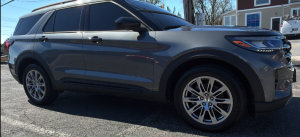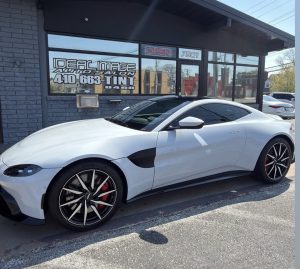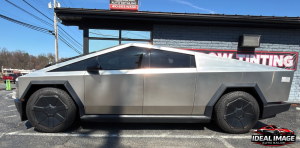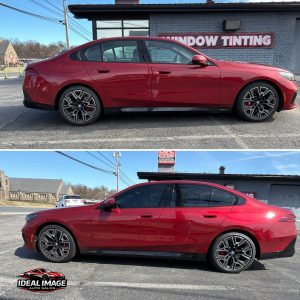
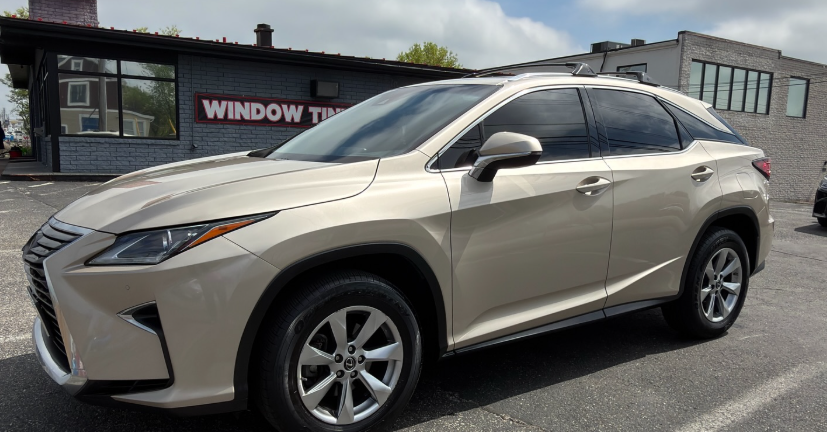
Every car we tint gets the same film — and it's not by accident. Here's why Terraflex Nano Carbon earned a permanent spot in our shop, and what that decision means for the thousands of Baltimore County and Harford County drivers who've sat in our install bay on Belair Road.
When a customer asks us what tint they're getting on their car, a lot of shops hand over a generic answer — "a good ceramic" or "our premium film." We don't do that. When you book a tint job at Ideal Image Auto Salon, you're getting Terraflex Nano Carbon, and we can tell you exactly why we chose it, exactly how it's built, and exactly what it will do for your vehicle.
Picking a preferred film isn't a casual decision for a serious shop. Every roll we bring in has to pass the same test: does it perform well in the real world, does it hold up to Maryland summers and winters, does it install cleanly, and does it stand behind its warranty? Terraflex passed all four, and then some.
The short version
Terraflex Nano Carbon blocks up to 67% of infrared heat and 99.9% of UVA and UVB rays, contains zero dye (so it will never fade or turn purple), is non-metallic (so it won't interfere with your phone, GPS, or toll transponder), and carries a limited lifetime warranty. That's the film your car leaves our shop wearing.
What Terraflex Nano Carbon Actually Is
Not all window tint is built the same way, and understanding the construction is the first step to understanding why this particular film performs the way it does.
Terraflex is a 2-ply, 1.5-mil film manufactured by Flexfilm. Between two weatherable layers of polyester, it carries nano-sized particles of carbon suspended in the laminate. Those carbon particles are what do the heavy lifting — they absorb a large chunk of the solar energy that dyed films let straight through. Flexfilm ties the whole sandwich together with their proprietary Carbamate HD adhesive, which is engineered to bond faster, cure cleaner, and hold longer than standard tint adhesives.
In plain English: it's a modern carbon film with no dye, no metal, and no compromises on the core performance numbers that actually matter once you're driving the car.
The Numbers That Made Us Commit
When we evaluate a film, we look past the marketing language and at the real performance data. Here's what Terraflex delivers:
Those three numbers tell you almost everything you need to know. Sixty-seven percent infrared rejection is a serious heat-blocking figure for a non-ceramic film — noticeably more than you'd feel from the dyed tint that populates most bargain shops. The 99.9% UV blocking is the figure that protects your dashboard, your upholstery, and more importantly your skin on long Maryland summer drives. And the zero dye content is the big one — the reason this film will still look right five, seven, ten years down the road.
The Problem with Dyed Tint (And Why Carbon Solves It)
If you've ever been behind a car with blotchy, purplish-looking side windows, you've seen dyed film fail. Dyed tint is the cheapest construction on the market, and the way it creates darkness is exactly what destroys it: pigment dye baked into the film's base layer. UV radiation breaks that dye down. In Maryland's climate — with real sun exposure from April through October — dyed film usually starts showing color shift within a few years, and by year five or six it often looks cooked.
Carbon film doesn't have this problem because it doesn't use dye at all. Terraflex gets its shade and performance from true carbon particles. Those particles don't degrade under UV. They don't oxidize. They don't change color. Flexfilm calls this their "Generation 6 carbon technology," and it's the reason we can offer a lifetime warranty and actually mean it.
| Quality | Dyed Film | Terraflex Nano Carbon |
|---|---|---|
| Color Stability | Fades and turns purple over time | Never fades or changes color |
| IR Heat Rejection | Minimal — mostly darkness without heat blocking | Up to 67% of infrared heat |
| UV Protection | Variable, often modest | 99.9% UVA and UVB |
| Signal Interference | None (non-metallic) | None (non-metallic) |
| Typical Lifespan | 3–5 years before visible degradation | Lasts the life of the vehicle |
| Warranty | Often limited or none | Limited lifetime warranty |
No Metal Means No Headaches with Your Electronics
There's an older class of high-performance film — metallic tint — that blocks heat well but creates a different problem. The metalized layer inside those films interferes with radio signals. Cell reception drops. GPS gets flaky. Toll transponders struggle to transmit from inside the car. Some radar-based driver assist systems work less reliably through the glass.
Terraflex is completely non-metallic. Carbon doesn't conduct a radio signal, so your E-ZPass reads cleanly at every toll gantry on I-95, your phone keeps its bars, your GPS stays locked, and your car's safety tech keeps working the way the manufacturer designed it to work. This matters more every year as vehicles get more dependent on signal-driven systems.
Built for Maryland's Full Weather Cycle
Baltimore County and Harford County cars don't live in mild weather. We go from 95°F and humid in July on I-695 to teens with road salt in January. Any film that's going to survive that has to hold up to thermal expansion, moisture, and the kind of UV intensity you get on a clear summer day along the Chesapeake.
Terraflex's two-ply polyester construction handles thermal cycling without delaminating. The Carbamate HD adhesive doesn't break down when the glass expands and contracts. And because there's no dye or metal to oxidize, there's no mechanism inside the film itself that can fail with age. It's about as Maryland-proof as a tint gets.
Why this matters for you: The film that "looked great on day one" isn't necessarily the film you want on your car. What you want is the film that still looks great on day 2,000. That's where Terraflex separates itself from the cheaper options most drivers encounter at discount shops.
A Factory-Matched Look Every Time
Modern vehicles often come with factory privacy glass on the rear — a slightly tinted glass built into the car from the manufacturer. The challenge for any tint shop is matching that factory shade when we add film to the front doors so the car looks uniform, not patchwork.
Terraflex comes in two color variants: a natural charcoal and a rich black. Most vehicles match seamlessly with the charcoal option. Newer vehicles with deeper factory privacy glass often match better with the black. Because we keep both in stock, we can pull the right shade off the shelf for your specific vehicle rather than making compromises with whatever's on hand.
Ready to See It on Your Vehicle?
We'll walk you through the shade options, measure your factory glass, and show you exactly what Terraflex looks like on a car like yours — no pressure, no up-sell games.
The Warranty Behind the Film
A film is only as good as the company that stands behind it. Terraflex carries a limited lifetime warranty against bubbling, cracking, peeling, fading, and color change. For a film with zero dye, that "no color change" guarantee isn't marketing puffery — it's the natural consequence of how the product is built. There's no pigment to fade in the first place.
When we install Terraflex on your vehicle, that warranty gets documented and attached to the job. If anything ever goes wrong with the film itself — not from damage or abuse, but from actual product failure — we're here to make it right. That's the whole point of using a premium brand over a no-name roll: the warranty has real teeth.
The Install Matters as Much as the Film
Even a great film can be ruined by a careless install. Contaminants under the film, wrinkles, bubbles, cracked edges, bad shrink work on curved back glass — all of that shows up within weeks and haunts the car for years. Part of why we chose Terraflex is because it installs beautifully when done by trained hands.
The Carbamate HD adhesive gives us more working time when we need it and faster tack when we don't. The film's advanced shrink profile lets us dart-free the most aggressive modern rear windows — the sharply curved glass on newer SUVs and performance cars that used to be a nightmare for older carbon films. When you combine a well-engineered film with a shop that knows how to use it, you get an install you won't be able to tell apart from factory glass.
Who This Film Is Right For
Terraflex Nano Carbon is the right choice for the vast majority of drivers who want:
A film that looks as good in 2032 as it does today
Because it won't fade or turn purple, the appearance you approve when your car rolls out of our shop is the appearance you'll keep. No budget-tint regret five years in.
Real heat and UV protection without going ceramic-tier
For drivers who want serious performance at a sensible price point, carbon hits the sweet spot. You get the no-fade guarantee and strong IR and UV numbers without paying for ceramic-level performance you may not need.
Full compatibility with modern vehicle tech
Non-metallic construction means your radar, GPS, cell reception, and toll transponder work exactly the same after tint as they did before. No compromises.
A Maryland-legal, professional-grade result
Terraflex is available in the full range of Maryland-legal VLT percentages, so we can install it at 35% on your front windows and match the factory glass in the back, all fully compliant with state law.
If you're looking for the absolute top of the performance pyramid — 98%+ IR rejection, maximum heat insulation — we can also spec up to Nanoflex, Flexfilm's premium ceramic option. But for the driver who wants excellent performance, lifetime color stability, and a film that proves its value every day? Terraflex Nano Carbon is where we confidently land, and it's why we put it on the vast majority of the cars that come through our doors on Belair Road.
Frequently Asked Questions
No — Terraflex is a carbon film, not a ceramic film. It uses nano-sized carbon particles (rather than ceramic particles) to block heat and UV. Carbon delivers strong performance and guaranteed no-fade color stability at a more accessible price than ceramic. For drivers who want the absolute maximum heat rejection, we also offer Panaflex and Nanoflex, which are built on a carbon base but add ceramic particle technology for higher IR rejection.
No. Terraflex is manufactured with zero dye. Because the shade comes from carbon particles instead of pigment, there's nothing in the film that can fade, oxidize, or change color under UV exposure. This is one of the main reasons we chose it as our preferred film — Maryland sun is tough on dyed tint, and we don't want our customers coming back in four years with a car full of purple windows.
No. Terraflex is completely non-metallic. Carbon doesn't block radio frequencies, so cell reception, GPS signal, satellite radio, radar-based driver assist systems, and your E-ZPass or toll transponder will all work exactly as they did before the tint was installed. This is a major advantage over older metallic tint technologies.
When properly installed and cared for, Terraflex is designed to outlast the vehicle it's applied to. It comes with a limited lifetime warranty covering bubbling, cracking, peeling, fading, and color change. The no-dye construction means there's no mechanism inside the film that naturally degrades with age, which is why the warranty can reasonably extend for the life of the vehicle.
Yes, when installed at the proper VLT percentage. Maryland law requires a minimum of 35% VLT on front side windows for passenger vehicles. Terraflex is available in a range of VLT percentages, and at our shop we measure your factory glass before choosing the correct film shade to make sure the installed combination meets the law. Because Terraflex is non-metallic and non-reflective, it fully complies with Maryland's reflectivity restrictions.
Because offering a budget option means selling customers a film we know will likely fail within a few years. We've watched too many cars come through the door with bubbling, purpling dyed tint and frustrated owners wondering what happened. Standardizing on Terraflex means every customer who walks out of our Nottingham shop drives away with the same quality of work, the same performance, and the same lifetime warranty. No downgrades, no trade-offs, no regret a few years later.
Panaflex is built on the same carbon chassis as Terraflex but adds a ceramic particle layer that pushes IR rejection up to about 88% (versus Terraflex's 67%). If you spend a lot of time in the sun, have a black interior that heats up fast, or simply want the maximum heat insulation available in a mid-tier film, Panaflex is worth the upgrade. For most drivers, Terraflex's performance is more than sufficient — and it's the film we install by default.
Get Terraflex Nano Carbon on Your Vehicle
We've built our reputation on standing behind our work — and the film we install plays a big part in that. When you tint your windows at Ideal Image Auto Salon, you're getting the same premium carbon film on your daily driver that we'd put on our own cars.
📞 410-663-8468
Serving Baltimore County, Harford County, White Marsh, Bel Air, and the greater Baltimore area